

Hiking in Cooks Forest: A Local’s Trail Guide
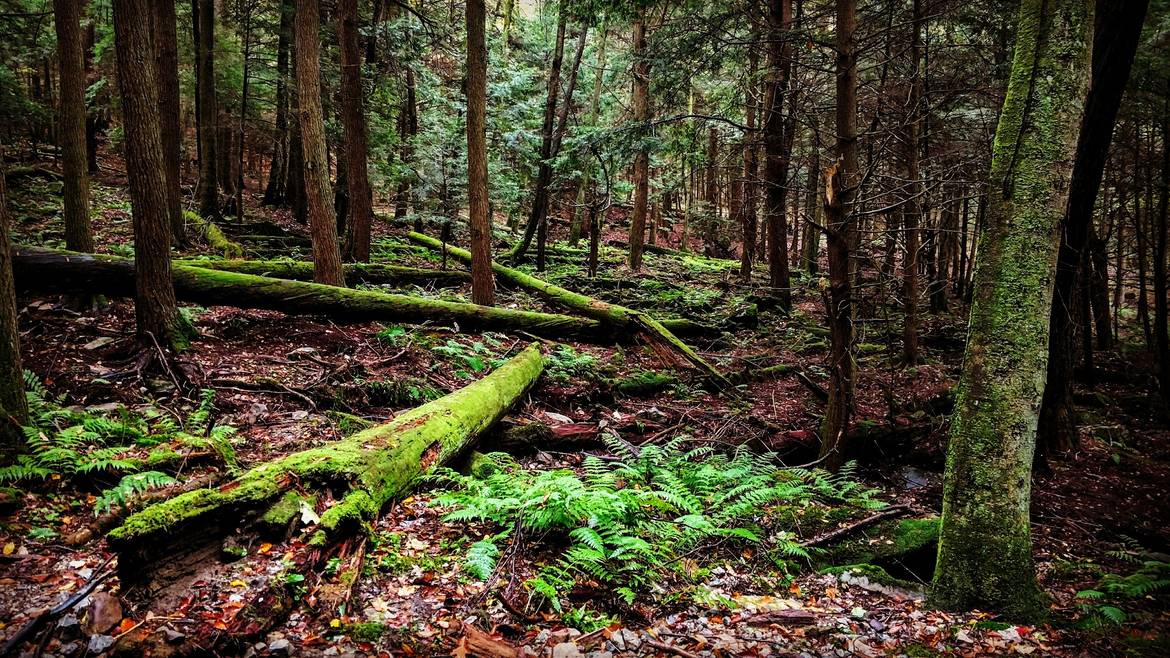
There is something about hiking in Cooks Forest that just slows everything down. The pines tower over the trail, the moss is soft underfoot, and the air feels a little cleaner than it does anywhere else. We grew up running these woods, and now we get to share them with our own kids and with every guest who stays with us at Hemlock Haven Retreats.
Cook Forest State Park covers more than 8,500 acres of old growth and second growth forest in northwestern Pennsylvania. With over 47 miles of trails, plus another 32 miles of multi use paths and connections into the Allegheny National Forest, you can spend a long weekend here and still not see it all. That is partly why we love it.
This guide pulls together our favorite trails, the ones we send guests on first, and a few honest tips on where to start, what to bring, and how to plan around the seasons. If you are putting together a hiking trip to Cooks Forest, this should give you everything you need.
The Trails That Make Cook Forest Special
Cooks Forest is famous for one thing above almost anything else: the old growth white pines and hemlocks of the Forest Cathedral. Many of these trees are 300 to 400 years old. Standing among them feels like stepping into a different century. The trails here are well marked, mostly hilly, and wonderfully varied. Here is where to start.
Cook Forest State Park
Cook Forest State Park is the umbrella for almost every great hike in the area. Trails fan out from a handful of parking lots, all of them within a short drive of Cooksburg. The park ranks among the most beloved state parks in Pennsylvania, and once you spend a morning here you will understand why.
- Rating: 4.9 stars (669 reviews)
- Address: Leeper, PA 16233
- Phone: (814) 744-8407
- Hours: 5 AM to 6 PM daily (6 AM on Fridays)
- Best for: All ages and experience levels, from a 20 minute walk to a full day on the trails
- Local tip: Park at the Log Cabin Inn Environmental Learning Center to access the Forest Cathedral trailheads. Lots fill up fast on summer and fall weekends, so arrive before 10 AM.
- Map: View on Google Maps
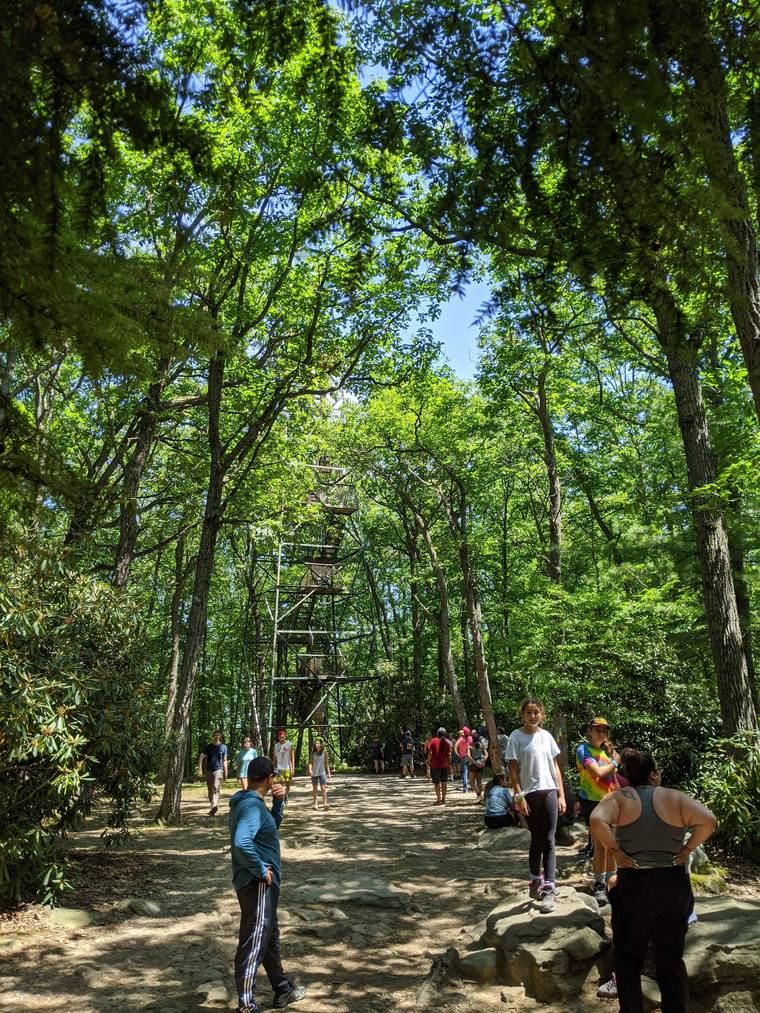
Hikes With a View (and a Climb)
The Cathedral side of the park is mostly flat and shaded. If you want elevation and big payoff views, head to the southeast corner of the park near Fire Tower Road. This is where you find the panoramic overlooks and one of our family’s favorite spots in all of Pennsylvania.
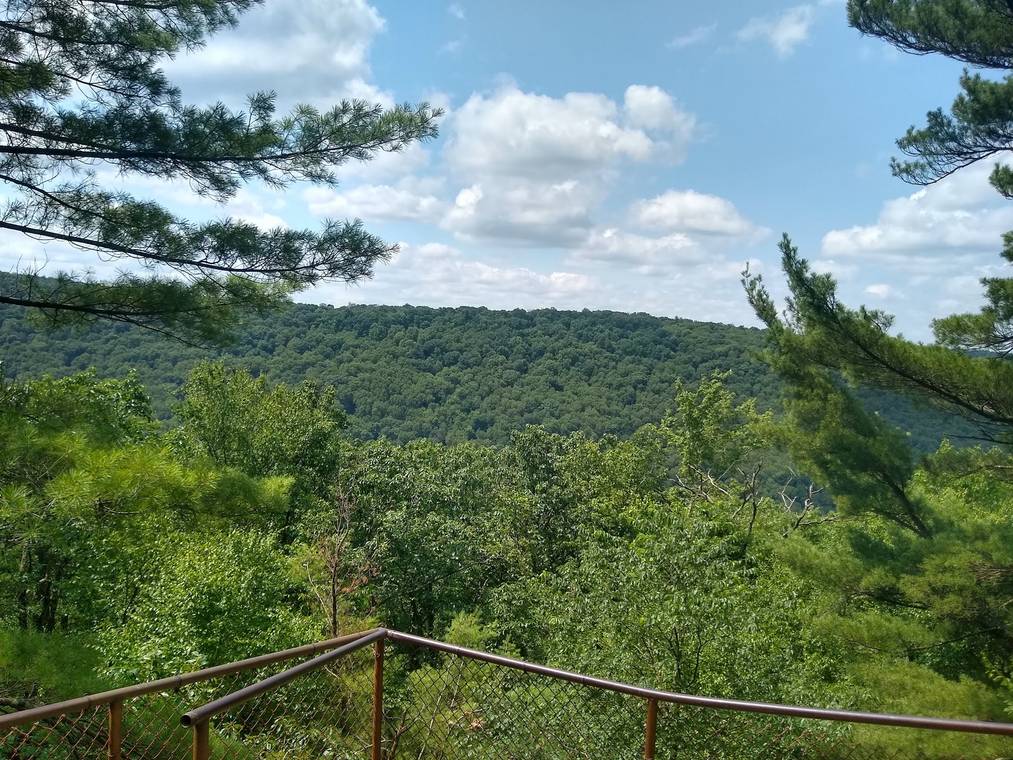
Seneca Point Overlook
Seneca Point is the postcard view of Cooks Forest. From the wooden viewing platform you can see the Clarion River winding through the valley below, with miles of forested ridges rolling out toward the horizon. The path from the parking lot is short and family friendly, which makes this a perfect first hike for guests staying with us.
- Rating: 4.8 stars (177 reviews)
- Length: Less than a quarter mile from the Fire Tower Road parking area
- Difficulty: Easy
- Best time: Mid October for peak fall color, golden hour for soft light on the river
- Local tip: Combine Seneca Point with the Fire Tower in a single visit. They share a parking lot.
- Map: Seneca Point on Google Maps
Tom’s Run Trail
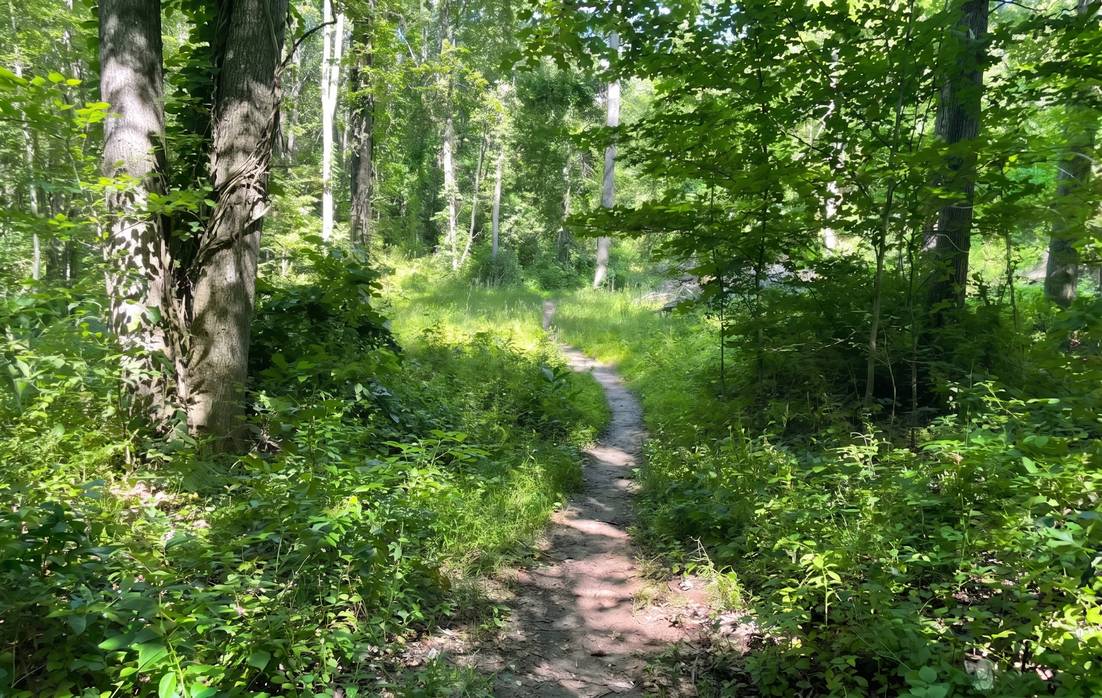
For a gentler creekside hike, Tom’s Run Trail is hard to beat. The path follows the namesake stream as it cuts through the heart of the park, crossing little wooden bridges and passing past pools where kids love to splash.
- Length: Roughly 2 miles one way, easy to moderate
- What you will see: The stream, native brook trout in the deeper pools, occasional deer at dawn and dusk
- Best for: Families, anyone hiking with a dog (on leash), summer afternoons when you want shade
- Local tip: Bring water shoes if it is hot. The kids will end up in the creek anyway.
- Map: Tom’s Run area on Google Maps
Black Bear Trail and Emerald Path
The Black Bear Trail and the connecting Emerald Path make the easiest loop in the park. The route starts at the Sawmill parking lot, runs flat along Tom’s Run, and is wheelchair accessible in sections. Great for grandparents, toddlers, or anyone who wants a peaceful walk without much elevation.
- Length: Under a mile, easy
- Best for: First time visitors, very young or older hikers, post breakfast strolls
- Trailhead: Sawmill parking lot
- Local tip: Pair it with a stop at the Cook Forest Sawmill Center for the Arts, right next to the trailhead.
Longer Hikes for Serious Trail Time
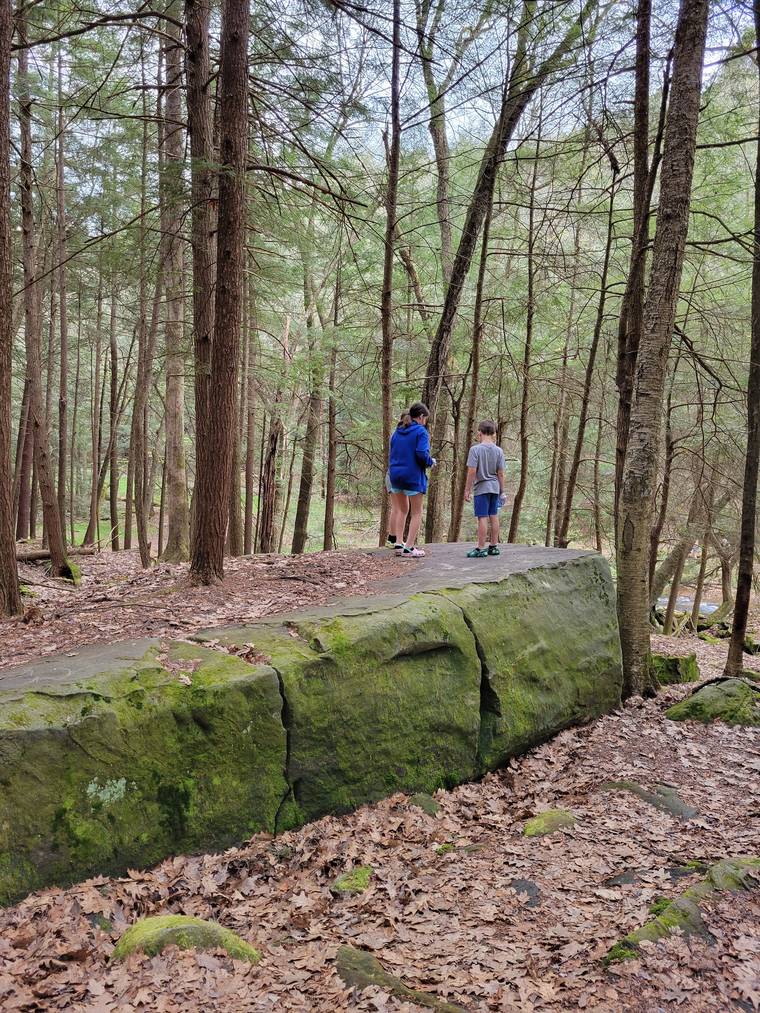
If you have a full day and good weather, the longer routes get you deeper into Cook Forest country. The North Country National Scenic Trail passes right through the park, which means you can stitch together a full ridge to river loop. A favorite local route runs the Fire Tower, Seneca Point, and a connecting section of the North Country Trail down to a hidden waterfall and back, roughly five miles, rated moderately challenging.
The Tobeco Trail runs about 7.5 miles through the more remote sections of the park and is rated more difficult. It is rocky, lightly traveled, and a great pick if you want to put in real miles. Bring a paper map. Cell service is spotty.
For something in between, link the Indian Trail (1.1 miles, difficult) with the Forest Cathedral system for a full morning of mixed terrain.
Cook Forest State Park Office
Before any longer hike, we recommend a quick stop at the Cook Forest State Park Office in Cooksburg. The rangers are friendly, the maps are free, and they will give you up to date trail conditions, especially after big storms.
- Rating: 4.6 stars (200 reviews)
- Address: 100 PA-36, Cooksburg, PA 16217
- Phone: (814) 744-8407
- Hours: 8 AM to 4 PM daily
- Local tip: Pick up the printed Cook Forest Trail Map here. It is more accurate than most apps for the smaller connectors.
- Map: Park Office on Google Maps
Tips for Hiking in Cooks Forest
After a lifetime of hiking these woods, here are the things we want every guest to know:
- Start early. Lots fill up by 10 AM on summer and fall weekends. The Forest Cathedral is also at its absolute best in the morning light, with sun rays cutting through the canopy.
- Watch the weather. Pennsylvania weather flips fast. We have seen sunny mornings turn into thunderstorms by 2 PM, especially in July and August. Pack a rain layer.
- Wear real shoes. The trails are rooty, rocky, and often wet. Hiking shoes or trail runners will save your ankles.
- Carry water and a snack. There are no concessions on the trails. The closest spots to refuel are along PA-36 in Cooksburg.
- Yes, there are bears. Black bears are common in the park, but they are shy and avoid people. Make noise on remote trails, especially in the spring and fall, and never leave food or trash behind.
- Ticks are real. From May through October, treat your shoes and pant cuffs with permethrin, tuck pants into socks on overgrown trails, and check yourself when you finish.
- Cell service is unreliable. Download offline maps before you leave the cabin. AllTrails works well, but the printed park map is more reliable for the connector trails.
- Pack out everything. This is one of the cleanest state parks we know. Help us keep it that way.
When to Hike in Cooks Forest
Each season has its moment. Spring (April through May) brings wildflowers, gushing streams, and the lightest crowds. Summer (June through August) is lush and shady, but busy on weekends. Fall (mid September through late October) is our favorite, with peak foliage usually landing in the third week of October. Winter (November through March) is quiet and stunning if you have traction devices for your boots, and the winter activities in Cook Forest make a hiking trip into a full weekend.
For a deeper look at timing, see our guide on the best time to visit Cook Forest.
Where to Stay When You Come Hiking
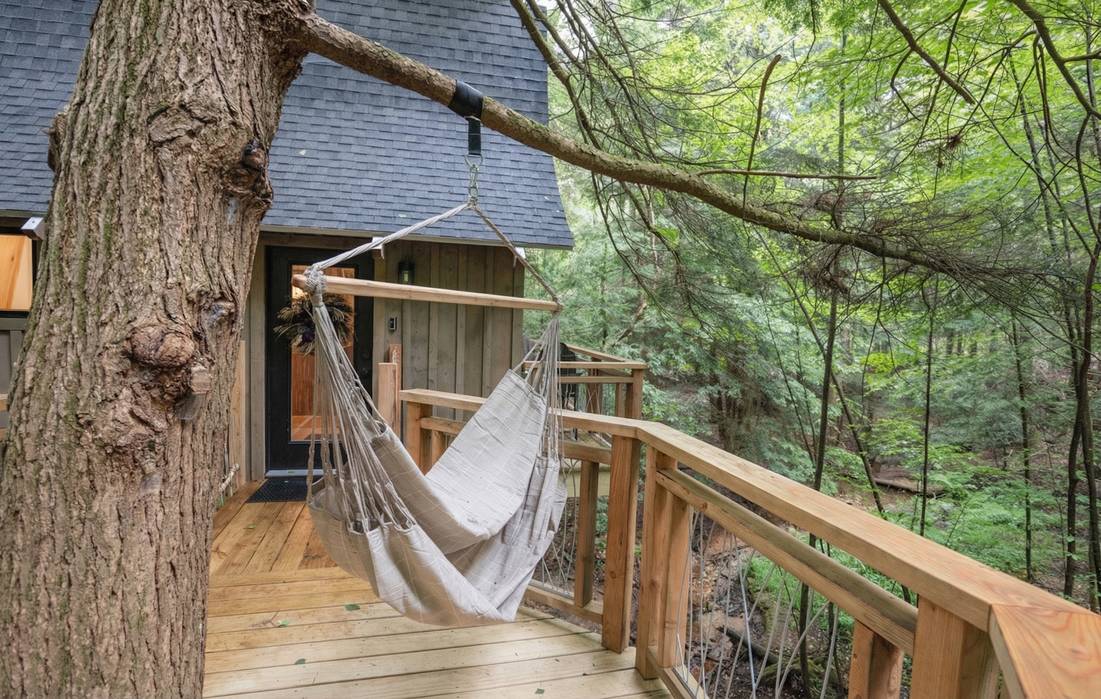
After a long day on the trails, the last thing you want is a long drive. We built Hemlock Haven Retreats to be the kind of place we always wanted to come back to ourselves: tucked into the woods, walking distance to coffee, and minutes from every trailhead in this guide.
- The Enchanted Luxury Treehouse is our flagship stay, perfect for couples who want a romantic basecamp.
- The Peaceful Pines Treehouse has a king bed and scenic deck, ideal for slow mornings before you head out.
- The Maple Creek Cabin and Cozy Cottage near Cook Forest Park are perfect for small families.
- The Salmon Creek Cabin sits on 35 secluded acres for guests who really want quiet.
Browse all of our cabins and treehouses on our properties page, or check our area guide for more local recommendations.
Frequently Asked Questions
How many hiking trails are in Cook Forest?
Cook Forest State Park has more than 47 miles of hiking trails, plus another 5 miles of multi use trails. Adjacent Clarion River Lands and the Allegheny National Forest add another 30 plus miles within a short drive, so a long weekend can easily fill up.
What is the most popular hike in Cooks Forest?
The Longfellow Trail through the Forest Cathedral is the most popular hike. It is 1.2 miles, moderate, and runs through Pennsylvania’s first National Natural Landmark, with old growth white pines and hemlocks that are 300 to 400 years old.
Are there bears in Cook Forest State Park?
Yes, black bears live throughout the park and the surrounding Allegheny region. They are shy and almost always avoid people. Make noise on remote trails, never leave food unattended, and store trash properly. In ten years of hiking here we have only spotted bears a handful of times.
Is Cook Forest good for beginner hikers?
Absolutely. The Black Bear Trail, Emerald Path, and the short walks to Seneca Point are all easy and family friendly. The Forest Cathedral on Longfellow Trail is moderate but flat enough for most casual hikers, and the payoff is huge.
What is the best time of year for hiking in Cook Forest?
Mid October for fall color, late June to early July for the rhododendron and mountain laurel bloom, and weekday mornings in any season for the quietest trails. Avoid heavy rain and ice events, since the rocky sections get slick.
Do I need a permit to hike in Cook Forest State Park?
No permit is required for day hiking. The park is free to enter and most trailheads have free parking. Camping and cabins inside the park do require reservations through Pennsylvania DCNR.